 Merken
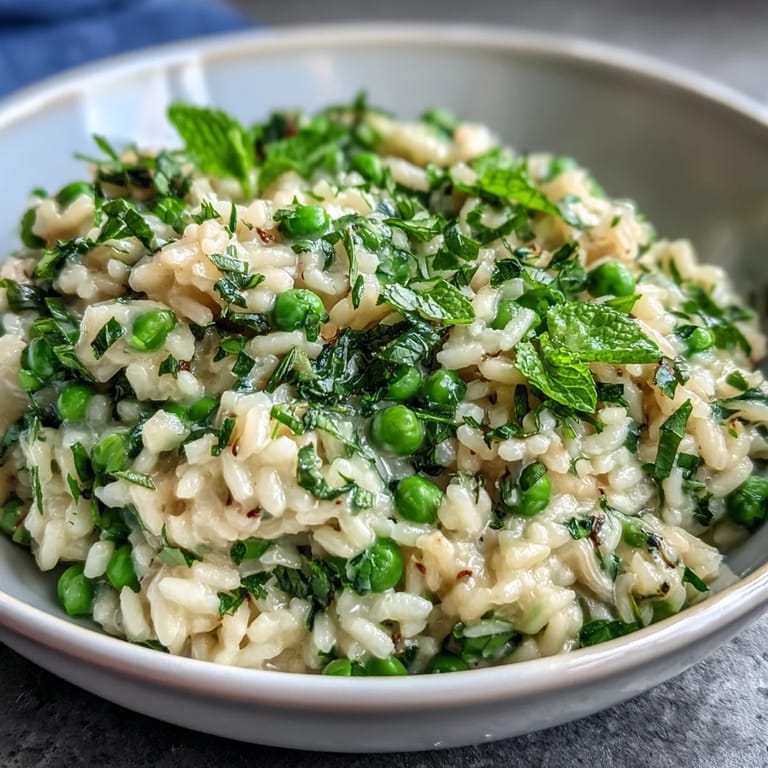
 My neighbor knocked on the door one April afternoon with a basket of just-picked peas from her garden, and I realized I'd been making risotto all wrong for years. She stayed in the kitchen while I cooked, chatting about how the secret wasn't fancy technique but respecting when things wanted to be added, and suddenly the whole dish came alive with brightness I'd never captured before. That evening taught me that risotto isn't about precision as much as presence, and these spring peas with mint became the dish I make whenever I want to remember that moment.
I made this for my sister's birthday dinner when everyone was tired of winter food, and watching her eyes light up at that first bite reminded me why I cook. She actually set down her fork to tell me it tasted like "what spring tastes like," and I've chased that exact moment of joy in this dish ever since.
Ingredients
- Fresh or frozen green peas (1 cup/150 g): Fresh peas are magical if you can find them, but frozen work beautifully and sometimes taste fresher since they're picked at peak ripeness. Add them late so they stay bright green and tender rather than turning gray.
- Arborio rice (1 1/2 cups/300 g): This short-grain rice releases starch as it cooks, creating that creamy texture risotto is known for. Don't swap it for long-grain rice or you'll lose the soul of the dish.
- Vegetable stock (4 cups/1 L): Keep it warm in another pot so it can be added gradually without shocking the rice and slowing the cooking process.
- Dry white wine (1/2 cup/120 ml): The acidity brightens everything and adds depth. Sauvignon Blanc or Pinot Grigio work beautifully here.
- Unsalted butter (3 tbsp, divided): Butter is non-negotiable for risotto, the foundation of that luxurious creaminess that makes people close their eyes when they taste it.
- Freshly grated Parmesan cheese (1/2 cup/40 g, plus extra for serving): Grate it yourself right before cooking so it melts into clouds rather than clumping up from pre-grated varieties.
- Fresh mint leaves (1/4 cup/10 g, finely chopped): This is where the magic happens, added at the very end so the flavor stays bright and alive on your tongue.
- Lemon zest (from 1 lemon): Just a whisper of this lifts everything, cutting through richness and reminding you of spring mornings.
- Salt and freshly ground black pepper: Taste as you go because risotto's creaminess masks salt until suddenly it doesn't.
Tired of Takeout? 🥡
Get 10 meals you can make faster than delivery arrives. Seriously.
One email. No spam. Unsubscribe anytime.
Instructions
- Begin with butter and aromatics:
- Melt 2 tablespoons of butter in a large saucepan over medium heat, then add your finely chopped onion and let it soften for about 4 minutes until it becomes translucent and sweet. Stir in the minced garlic for just 1 minute more so it releases its fragrance without browning.
- Toast the rice:
- Pour in the Arborio rice and stir it constantly for about 2 minutes, coating each grain in butter until they look slightly glossy and you hear a gentle clicking sound as you stir. This step seems small but it's what keeps the rice from becoming mushy later.
- Deglaze with wine:
- Pour in your white wine and keep stirring until it's almost completely absorbed, which takes maybe 2 or 3 minutes and fills your kitchen with the most wonderful smell.
- Add stock gradually and stir with intention:
- This is the meditative part where you add one ladleful of warm stock at a time, stirring frequently and waiting until most of the liquid is absorbed before adding more. It takes about 18 to 20 minutes total, and if you pay attention to the risotto's rhythm instead of rushing, you'll develop an instinct for when it's ready.
- Fold in the peas at the right moment:
- During the last 5 minutes of cooking, stir in your peas gently so they warm through and stay bright green and tender rather than turning dark and soft. This timing makes all the difference between a dish that tastes like spring and one that tastes cooked.
- Finish with richness and herbs:
- Remove from heat and stir in your remaining butter, grated Parmesan, chopped mint, lemon zest, and a generous seasoning of salt and pepper. The residual heat will melt everything into silky creaminess if you stir gently and with love.
- Serve immediately while it's warm:
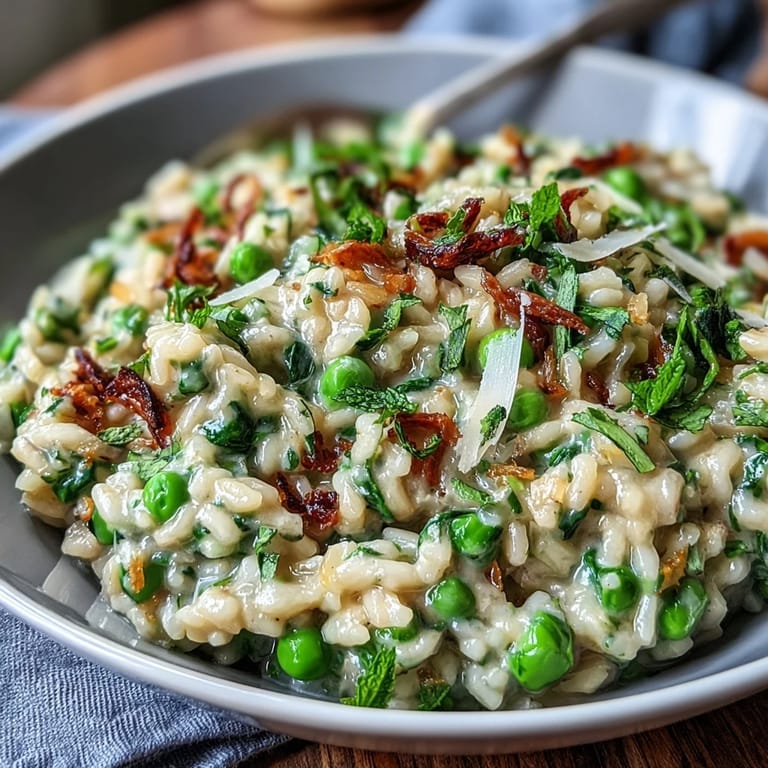
- Divide into bowls right away and top with extra Parmesan and fresh mint leaves so each person gets the full experience of that herbaceous brightness.
 Merken
 There's a moment toward the end of making risotto when everything transforms from separate ingredients into something cohesive and creamy, and it reminds me that some of the best things in life require patience and presence. That moment is why I make this dish when I want to slow down and cook with intention.
The Rhythm of Risotto
Risotto teaches you to listen to your food in a way most cooking doesn't. The constant stirring isn't busywork but a conversation where you watch the rice gradually soften and the liquid slowly disappear, and you learn to feel when it's ready by the way it moves in the pan. Once you understand this rhythm, you'll find it relaxing rather than demanding, a kind of kitchen meditation that produces something beautiful.
Spring Flavors and Variations
While this recipe celebrates fresh peas and mint, the same technique works beautifully with whatever spring has to offer in your region. I've made versions with asparagus and dill, with zucchini and basil, with fresh herbs I found at the farmers market on a whim. The method stays the same, but the final flavor changes completely.
Pairing and Serving Suggestions
This risotto is elegant enough for a dinner party but approachable enough for a quiet Wednesday night when you want something that feels special. A crisp white wine like Sauvignon Blanc or Pinot Grigio pairs perfectly, as does a simple green salad with lemon vinaigrette to cut through the richness.
- Drizzle with good-quality olive oil just before serving if you want extra richness and a peppery finish.
- A crusty bread on the side turns this into a complete meal without feeling heavy.
- You can substitute frozen peas without any guilt since they're often fresher than fresh peas shipped long distances.
 Merken
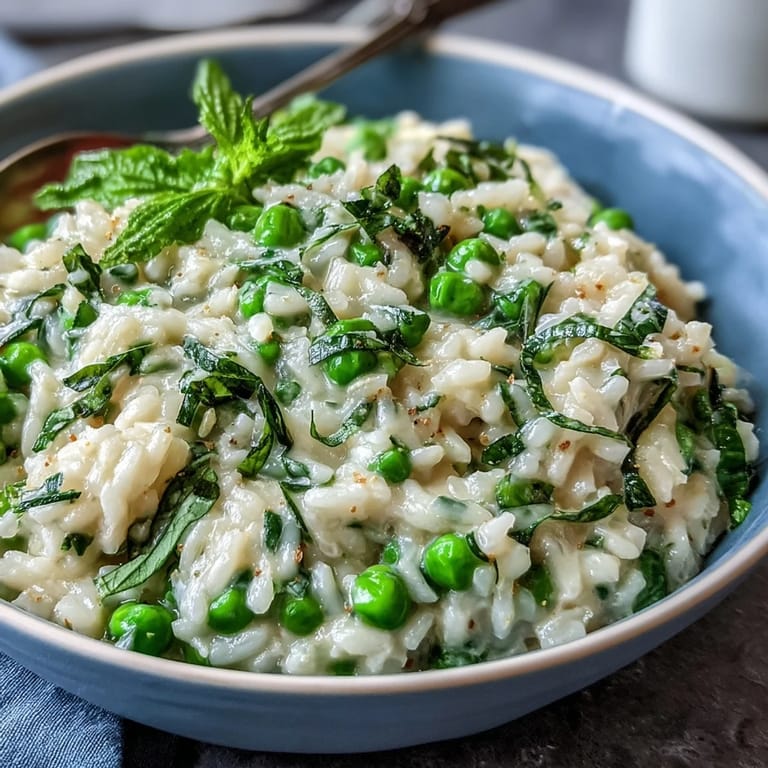
 This dish reminds me that the simplest ingredients, treated with respect and attention, become something worth savoring. Make it for someone you want to impress, or make it for yourself on a day when you need to remember that spring is coming.
Fragen & Antworten zum Rezept
- → Wie erreicht man die perfekte cremige Konsistenz beim Risotto?
Die cremige Konsistenz entsteht durch langsames Zugießen warmer Gemüsebrühe unter ständigem Rühren, sodass der Reis Stärke abgibt und sämig wird.
- → Kann man gefrorene Erbsen verwenden?
Ja, gefrorene Erbsen funktionieren gut. Sie sollten erst gegen Ende der Kochzeit hinzugefügt werden, um Frische und Farbe zu erhalten.
- → Wie würzt man das Gericht am besten?
Mit Salz, schwarzem Pfeffer und Zitronenzeste wird der Geschmack hervorgehoben. Frische Minze sorgt für zusätzliche Frische.
- → Welchen Reis empfiehlt man für dieses Gericht?
Arborio-Reis ist ideal, da er während des Kochens Stärke abgibt und das Risotto cremig macht.
- → Wie kann man das Gericht verfeinern?
Ein Schuss hochwertiges Olivenöl kurz vor dem Servieren sorgt für zusätzlichen Geschmack und reichhaltige Textur.