 Merken
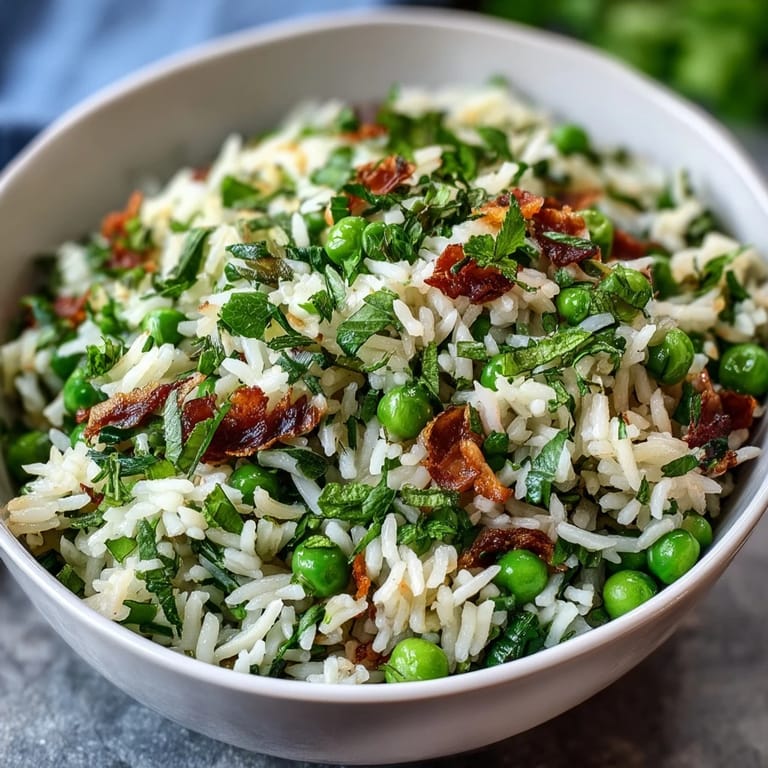
 An afternoon farmer's market visit turned into something magical when I spotted bundles of fresh mint still dewy from the morning spray. The vendor mentioned pairing it with spring peas, and suddenly I was imagining buttery rice infused with that bright green promise of the season. That evening, my kitchen filled with the most unexpected fragrance—not overpowering, just present, like a gentle reminder that winter was truly behind us. My partner wandered in halfway through cooking and asked what smelled like a garden, which made me laugh because that's exactly what I was trying to capture.
I made this for Easter dinner last year when my sister declared she was tired of the same heavy sides everyone always brought. The rice was so light and herbaceous that even my meat-and-potatoes uncle came back for seconds, which I'm still not sure how to process. What struck me most was watching my niece eat it without being asked, no persuasion needed—she just quietly loved it, and that felt like the highest compliment any dish could receive.
Ingredients
- 1 cup long-grain white rice (such as basmati or jasmine): Rinsing removes excess starch so each grain stays separate and fluffy rather than clumping together into a stodgy mess.
- 2 cups low-sodium vegetable broth: The broth becomes the foundation of flavor here, so choose one you'd actually drink—low sodium lets the peas and mint shine through without being masked.
- 1 cup fresh or frozen spring peas: Fresh peas are sweeter and more delicate, but frozen ones work beautifully and honestly, no one will judge you for using them in March.
- 1 small yellow onion, finely chopped: Yellow onions turn silky and slightly sweet when they cook, building a savory base that supports everything else.
- 2 tablespoons unsalted butter: Unsalted gives you control over the final salt level, and it carries the aromatics through the rice like nothing else can.
- 2 cloves garlic, minced: Garlic cooked this gently becomes mellow and almost buttery, not harsh or aggressive—it whispers rather than shouts.
- 1/2 cup fresh mint leaves, finely chopped: Fresh mint is non-negotiable here; dried mint tastes like straw by comparison and changes the entire character of the dish.
- 2 tablespoons fresh flat-leaf parsley, chopped (optional): Parsley adds a subtle earthiness that makes the mint taste more like mint, if that makes sense.
- 1 teaspoon lemon zest: The zest brings acidity without liquid, cutting through the richness of butter and brightening everything up.
- 1/2 teaspoon salt, or to taste: Taste as you go because salt levels vary wildly depending on your broth choice.
- 1/4 teaspoon freshly ground black pepper: Fresh pepper has actual flavor and aroma, which makes a surprising difference in a dish this delicate.
- Lemon wedges (optional): They're not just garnish—squeezing one over your bowl adds a final punch that ties everything together.
Tired of Takeout? 🥡
Get 10 meals you can make faster than delivery arrives. Seriously.
One email. No spam. Unsubscribe anytime.
Instructions
- Rinse and prepare your rice:
- Run cold water over the rice in a fine mesh strainer, stirring it gently with your fingers until the water underneath runs clear—this takes maybe a minute and saves you from sticky, gluey rice later. Drain thoroughly so you're not adding extra moisture to the pot.
- Build your aromatic base:
- Melt butter over medium heat and let it get foamy and smell nutty before adding onion, then watch as it softens from sharp and crunchy to golden and translucent in just a few minutes. This is when your kitchen starts smelling like something good is happening.
- Wake up the garlic:
- Add your minced garlic and give it maybe 30 seconds—you want to smell it transform and release its perfume without letting it brown and turn bitter. This tiny step makes an enormous difference in the final flavor.
- Toast the rice:
- Stir the rinsed rice into the butter and aromatics, coating every grain until it turns translucent at the edges and smells toasty and warm. This takes about a minute and develops a subtle depth you'd otherwise miss.
- Bring it to a boil:
- Pour in your broth along with salt and pepper, give it a stir, and let it come to a rolling boil—you'll see the broth get slightly agitated and steam rising up. Once it boils, you're ready to move to the gentle phase.
- Simmer low and slow:
- Reduce heat to low, cover with a lid, and let it sit undisturbed for 15 minutes—resist the urge to peek or stir because you're building steam that cooks the rice evenly. When you do lift the lid later, the aroma will make you feel like you've done something impressive.
- Add the peas:
- After 15 minutes, stir in your peas straight from the freezer if they're frozen, or raw if they're fresh, then cover again for five more minutes. The residual heat gently cooks them while keeping them bright and tender.
- Let it rest:
- Turn off the heat and leave the lid on for five minutes—this lets the rice relax and any remaining liquid absorb evenly. Patience here means fluffier rice.
- Finish with brightness:
- Fluff everything with a fork to break up any clumps, then fold in your fresh mint, parsley if you're using it, and lemon zest while the rice is still warm enough to release their aromatics. Taste it and adjust salt because that's the moment you realize if it needs anything else.
 Merken
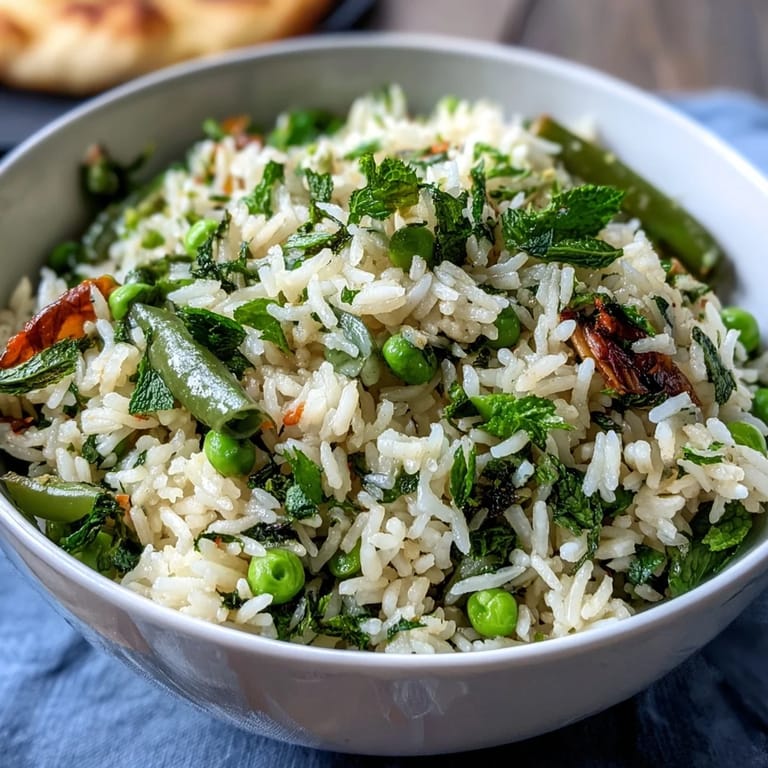
 There's a moment right when you fluff the rice and the steam rises up carrying that mint fragrance that you realize this simple dish has somehow become something people will actually want to eat. That's when you know you've gotten it right.
When Spring Feels Real Again
This rice tastes like the specific moment when you stop wearing layers and remember what your shoulders look like. It's what you make when you're tired of heavy roasted vegetables and creamy casseroles, when you want something that tastes like hope in a bowl. The bright green of the peas and the specks of mint throughout make it look like spring even in your kitchen, which matters more than people admit.
Make-Ahead Magic
You can absolutely make this hours ahead if you need to—in fact, the flavors meld and become even more cohesive as it sits. Just give it a gentle reheat in the same saucepan with a splash of broth to bring back the steam, and it tastes nearly as fresh as when you first made it.
Flexibility Without Losing Your Way
The beauty of this recipe is how forgiving it is if you want to play around a little. The structure is solid enough that substitutions don't knock everything off balance, and you can really make it yours without starting from scratch.
- Swap in scallions or fresh chives if that's what you have on hand, or even dill if you're feeling bold and have it growing in a pot.
- For richness, use half butter and half good olive oil, which adds a fruity note that complements the mint beautifully.
- Make it vegan with plant-based butter or just extra olive oil, and the rice loses nothing—it's just a different kind of delicious.
 Merken
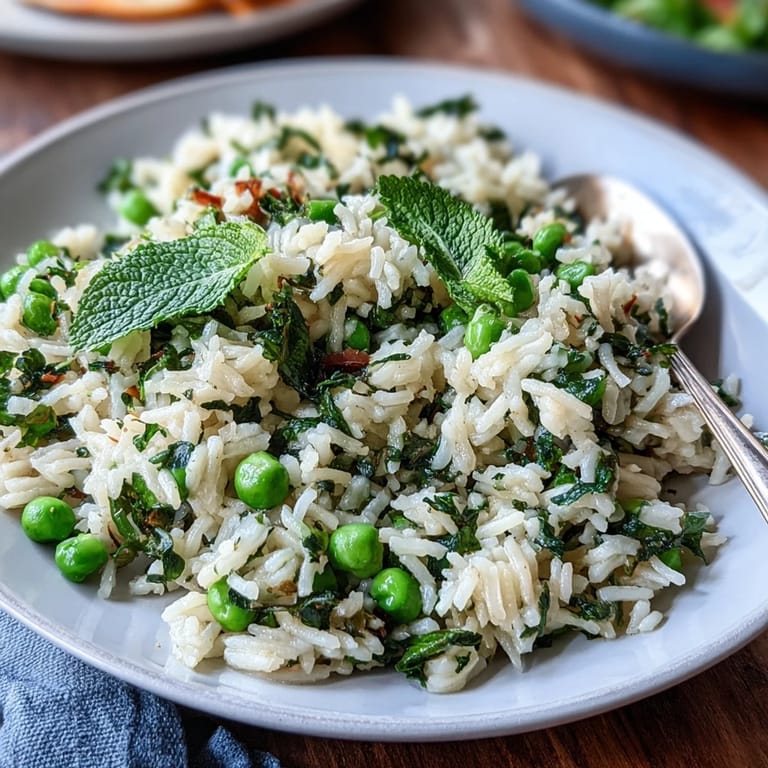
 This pilaf has quietly become one of those dishes I make whenever I need to remember that simple food, made with attention and fresh ingredients, is actually all anyone really wants. It's proof that you don't need complicated technique or obscure ingredients to make something memorable.
Fragen & Antworten zum Rezept
- → Wie verhindere ich, dass der Reis klebrig wird?
Reis vor dem Kochen gründlich mit kaltem Wasser waschen, bis das Wasser klar bleibt. Das entfernt überschüssige Stärke und sorgt für lockere Körner.
- → Kann ich gefrorene Frühlingserbsen verwenden?
Ja, gefrorene Erbsen können direkt zum Reis gegeben werden, ohne vorheriges Auftauen. Sie garen in den letzten Kochminuten perfekt mit.
- → Wie bewahre ich den Pilaw am besten auf?
Im Kühlschrank in einem luftdichten Behälter lagern. Beim Aufwärmen etwas Brühe oder Wasser hinzufügen, um die Feuchtigkeit zu bewahren.
- → Welche Kräuter passen gut als Alternative zu Minze?
Petersilie, Schnittlauch oder frischer Koriander ergänzen das Gericht ebenfalls gut und sorgen für unterschiedliche Aromen.
- → Wie mache ich das Gericht vegan?
Butter kann durch pflanzliche Margarine oder Öl ersetzt werden, um den Pilaw vegan zuzubereiten ohne Geschmackseinbußen.
- → Kann man das Gericht auch mit Vollkornreis machen?
Ja, Vollkornreis ist möglich, benötigt jedoch längere Kochzeit und eventuell zusätzliche Flüssigkeit. Die Textur wird herzhafter.